


Joana Deplazes, 30 March 2026
Healthy air for allergy sufferers
What can I do if I have allergies in my home? Causes and tips
Do you also struggle with annoying allergies, such as a house dust allergy? Dust mites, mould spores and other allergenic particles make life difficult for many of us, especially within our own four walls. But don’t worry, with a few simple furnishing tips you can turn your home into an allergy-friendly retreat. In this article, we give you useful tips on how you can make your flat or house allergy-free so that you can breathe easy.
Find out in this article
- What can trigger allergies in the home?
- What are the symptoms of indoor allergies?
- Recognising allergy symptoms is important
- How can I minimise allergies in my home?

What can trigger allergies in the home?
According to the Federal Office of Public Health, 15 to 20 per cent of the population in Switzerland suffers from an allergy. The most common causes of indoor allergies are house dust mites, animal dander and mould spores. These allergens can occur all year round and millions of people suffer from them. According to the aha! Allergy Centre Switzerland, a quarter of the population in Switzerland alone are affected by an allergy, with pollen allergies being the most common at up to 20 percent. Depending on the season, especially from spring to autumn, indoor pollen can be a major burden for allergy sufferers.
House dust mite allergy
One of the main sources of allergies in the home or other indoor spaces are house dust mites. These are microbially small arachnids that feel particularly at home in air humidity levels above 50 per cent and warm conditions. They prefer to live in curtains, upholstered furniture, carpets, mattresses, pillows and duvets. For healthy people, these little animals are harmless and do not transmit diseases. However, house dust mites release allergens through their excretions, which is a problem for allergy sufferers.
Mould allergy
An allergy can also be triggered with mould. Mould releases tiny particles, known as spores, which can trigger allergic reactions. Mould can be found both in nature and indoors.
Causes of mould
When humidity is high and materials are damp, mould can develop and infest almost all materials. To prevent mould from forming indoors, care should be taken to ensure that the relative humidity does not exceed 60 percent. According to the aha! Allergy Centre Switzerland, it is estimated that between 1 and 10 percent of the population are sensitised to this allergy. This means that there is a predisposition to develop the allergy.
You can find out how to avoid mould formation here.
Allergies with pets
Pets are another source of allergies. Most people are sensitised to cats, dogs, rodents and horses. It is not only the pet’s fur that can cause allergic reactions, but also dander and saliva, for example. As with all other allergies, allergens bind to dust particles and can remain in the air for several hours before sinking to the ground.
Pollen allergy / hay fever
Pollen allergies, also known as hay fever, are caused with the release of plant pollen outdoors. Different plants can be pollinated at different times of the year. The pollen settles on our clothes or hair, for example, and thus gets indoors.
You can find out how to alleviate the symptoms of hay fever here in our blog.
What are the symptoms of indoor allergies?
The various symptoms of the different allergies are explained below.
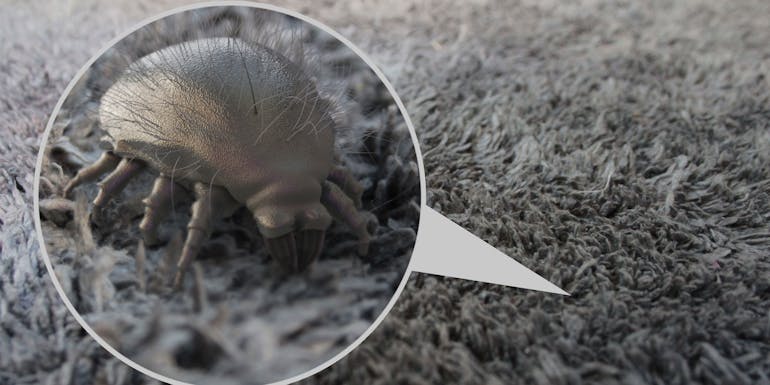
Symptoms of house dust mite allergy
Different symptoms can occur with a house dust mite allergy.
- Stuffy or runny nose
- Sneezing irritation
- Reddened and itchy eyes
- Allergic cough
- Skin reactions (itching and rash)
These symptoms can often become chronic, as house dust mites are present in the home all year round. The symptoms are more pronounced in the morning and during the colder months. It can also lead to conjunctivitis of the eyes and asthma.
Symptoms of mould allergy
Similar to other respiratory allergies, a mould allergy manifests itself with these symptoms.
- Allergic rhinitis
- Watery eyes
- Cough
- Breathing difficulties
- Irritation of the respiratory tract, eye mucous membranes and skin
- Asthma
In addition to these specific symptoms, non-specific sleep disorders can also occur. One sign of a mould allergy is that the symptoms decrease when the weather is sunny and increase after rain.
Symptoms of allergies in pets
Allergic reactions to pets manifest themselves with the following symptoms.
- Runny nose
- Conjunctivitis of the eyes
- Allergic asthma
- In some cases, a severe shock reaction can even occur
- Scratch wounds from animals can also lead to swelling, infections and allergic skin irritation
Symptoms of a pollen allergy
A pollen allergy manifests itself with the following symptoms.
- Swollen, itchy, burning eyes
- Inflammation of the conjunctiva of the eyes or the nasal mucosa
- Runny nose
- Scratchy throat
- Skin irritation
- AsthmaIn our blog article, we give you 10 tips against pollen allergies. Find out more here.
Recognising allergy symptoms is important
Recognising these symptoms is crucial for your own health and for taking appropriate measures to combat allergies in your home. From choosing suitable furnishings to regular cleaning, these measures can help to alleviate allergic reactions and improve your general well-being. If you suspect that you are suffering from an allergy, you should definitely consult a doctor to clarify your symptoms and treat them.
How can I minimise allergies in my home?
Here are some furnishing tips for your home.
- Use an air purifier: air purifiers are an effective way of filtering allergy-causing particles from the air. Invest in a high-quality device that uses a multi-stage filter system to effectively remove pollen, mould spores and other allergens from the air. At Stadler Form, you will find air purifiers that are equipped with a dual filter consisting of a HEPA filter and activated carbon filter and reliably filter the finest particles, gases and odours from the air.
- Favour smooth surfaces: if you are allergic to house dust mites, you should opt for smooth surfaces when choosing furniture, as house dust mites love structure and texture. Furniture made of wood, plastic or leather provides less of a habitat for mites and can also be wiped down with a damp cloth, making it ideal for allergy sufferers.
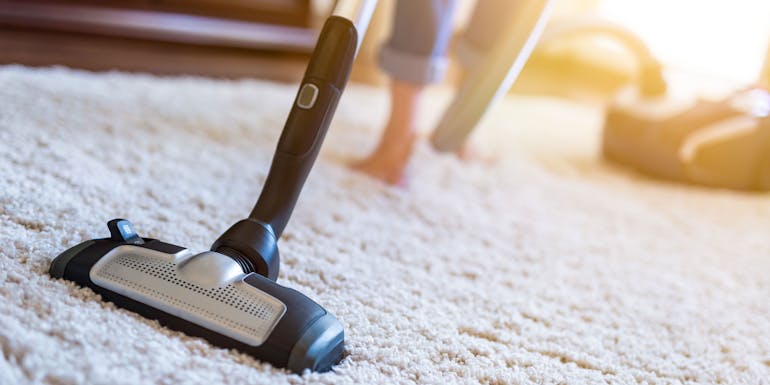
- Regular cleaning: cleaning your home regularly helps to reduce allergens. When cleaning, use a vacuum cleaner with a HEPA filter that traps even the finest particles. Replace this filter regularly. Wipe smooth surfaces with a damp cloth to remove dust. Keep the windows closed during cleaning to prevent dust from being stirred up.
- Not too many textiles: avoid unnecessary textile decorations such as heavy curtains, cosy blankets and decorative cushions, which can attract dust and mites. Instead, choose washable blinds or curtains that are easy to clean. You should also avoid carpets – use tiles, linoleum or hardwood instead.
- Choose the right bedding: the bed is a hotspot for house dust mites. Opt for mattresses and bedding made from antibacterial latex or cold foam, which allow air to circulate and make life difficult for mites. The bed linen should also be easy to care for and washable. Wash your bed linen, pillows and duvets regularly to effectively combat house dust mites. Pillows and duvets should be washed separately. Follow the instructions on the label and select the appropriate temperature. For example, duvets or pillows that are lined with down should be washed at a maximum of 40 degrees.
- Reduce moisture: mould in the home is always a problem and must always be removed by a specialist as it is harmful to health. Especially if you are allergic to mould, you should make sure that your home is not too humid. A relative humidity of 40 to 60 per cent is considered ideal. Reduce humidity in the bathroom and kitchen and use a hygrometer to monitor humidity. This will show you how high the relative humidity is. If the humidity is too high, you can use a dehumidifier; if the air is too dry, use a humidifier.
- Use closed storage space: for shelves and cupboards, opt for closed storage systems with doors to reduce the ingress of dust. Closed storage space not only reduces allergy exposure, but also makes cleaning easier. You should also avoid furniture arrangements that create hard-to-reach nooks and corners where dust can accumulate.
- Regular airing: airing is crucial to keep your home fresh and reduce allergens. Make sure you air your home at least twice a day for a few minutes. If you have a pollen allergy, it is best to ventilate in the early morning and late evening during the pollen season when the pollen concentration is lower.
- Pollen screens: pollen screens on windows are useful for allergy sufferers, as they keep most of the pollen out of the room. However, they should never be used on their own, but as an additional measure.
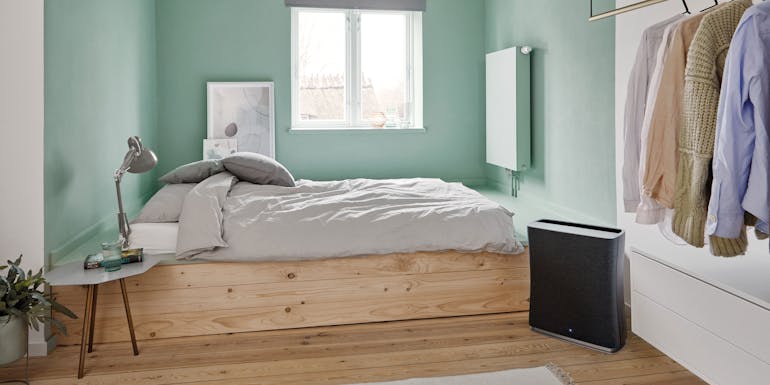
With these simple furnishing tips, you can make your flat or house allergy-friendly and reduce annoying allergy symptoms. A low-allergy home is not only good for your health, but also ensures a better quality of life.
You can find out more about pollen allergies and healthy air for allergy sufferers on our information page. There you will find interesting articles on topics such as what to do about pollen in the bedroom or how you can reduce allergy symptoms with 10 measures.
More about healthy air for allergy sufferers
If you have questions related to indoor room climate, please get in touch with us. Or subscribe to our newsletter to regularly get informed about current topics regarding indoor climate, experience reports or Stadler Form insights.
Matching products
Discover all products
399,00 €
Save 200,00 €

279,00 €
Save 180,00 €

579,00 €
Save 280,00 €


419,00 €
Save 44,00 €