Increasing humidity – tips for an optimal indoor climate
The quality of the air in our homes is crucial to our well-being. If the humidity falls below 40 per cent for several days, the air must be humidified to ensure an optimal climate. We give you tips on what you can do to combat dry air and show you how a humidifier can help.
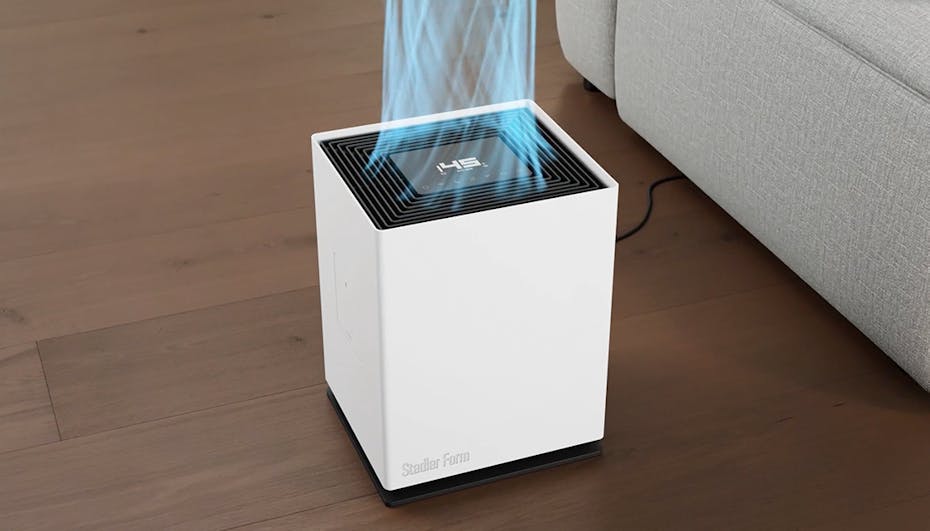
What is the ideal indoor humidity level? 🧐
The ideal relative humidity indoors is between 40 and 60 percent. If the hygrometer shows a relative humidity of less than 40 percent for several days, the air is too dry. The value should always be considered in relation to the temperature in the room, as the air can absorb more moisture at warm temperatures. An overview of the ideal humidity in combination with the optimal room temperature can be found here.

Humidify the air – these tips will help
The cold season and the use of heating systems cause the relative humidity in indoor spaces to drop. Cold air can absorb less moisture. When cold air enters indoor spaces, it becomes even drier with heating, causing the relative humidity to drop. If the value remains below 40 per cent for several days, it is time to take action.

With these tips, you can increase the humidity in the room and create an optimal indoor climate.
💡 Use a hygrometer: Before you start humidifying the dry air in the room, measure the current humidity with a hygrometer. The optimum value is between 40 and 60 per cent relative humidity.
💡 Improve humidity with a humidifier: A humidifier is the easiest and most effective way to achieve and maintain a value of 40 to 60 per cent.
💡 Use water vapour: Open the bathroom door after showering to allow the moisture to spread throughout your home. Cooking steam can also be useful for a short time.
💡 Do not heat too much: Make sure that you do not heat unnecessarily, as this reduces the relative humidity.
💡 Ventilate properly: Brief bursts of ventilation are more efficient for a good indoor climate than leaving windows tilted open all the time.
Would you like to learn more about proper heating and ventilation in autumn? Then read more here.
Effects of excessively dry air️

Dry air has numerous effects on our bodies.
❗️ Increased risk of infection with viruses and bacteria: Influenza viruses and other pathogens survive longer in dry air and thus multiply more easily. This increases the risk of contracting diseases.
❗️ Dry mucous membranes: The mucous membranes in the nose and throat dry out, disrupting the mucous membrane barrier and making us more susceptible to viruses and bacteria.
❗️ Dry eyes: The eyes also suffer from dry air and can become irritated. Dry indoor air can also affect the comfort of wearing contact lenses.
❗️ Breathing difficulties: Dry air is less able to transport oxygen. This makes breathing more difficult. Headaches, fatigue, concentration difficulties and sleep disorders can also occur.
❗️ Cough: Dry air can trigger a cough or aggravate an existing cough.
❗️ Dry skin and chapped lips: Dry skin can itch and existing skin conditions can worsen. Lips also suffer from dryness.
Functionality and systems
A humidifier is an effective method of humidifying the air. There are different types of humidifiers, but they all work in the same way: they increase the humidity by releasing additional moisture into the room.
Evaporator
The evaporator works on the natural principle of evaporation. The humidifier filters inside the device absorb water. An integrated fan draws in the room air and passes it through the moist humidifier filters. The air absorbs the required moisture. The air flowing through the filters picks up small water droplets and is then blown out into the room air together with the moisture. The evaporator system has two major advantages. Firstly, evaporators are very quiet and are therefore ideal for quiet rooms such as bedrooms or offices. Secondly, over-humidification is not possible with this system, as only as much moisture is added to the air as is needed and can be absorbed based on the current temperature. The filters in this system must be replaced regularly. Evaporators are particularly suitable for households with children and babies, as there is no hot water in the device compared to a vaporiser, cleaning is less time-consuming than with an ultrasonic nebuliser and the devices are usually very quiet.
Vaporiser
The water is brought to the boil in the device. Similar to a kettle, for example. With boiling the water, germ-free water vapour is produced. The hot water vapour is released directly into the room by the device. Vaporiser systems are particularly suitable for allergy sufferers. It is important to descale vaporisers regularly. We do not recommend using a vaporiser with hard water or water from descaling systems.
Ultrasonic nebuliser
This humidification system converts water into mist. A vibrating ultrasonic membrane in the nebuliser breaks the water down into tiny droplets. These are transported into the air with a fan integrated into the device, thus humidifying the air in the room. The mist emitted by the device is cold, unless the pre-heating function is activated. This makes nebuliser systems suitable for children’s rooms. The humidification produced by this system is due to the mist, which is why they are also called atomisers. Regular cleaning and descaling is particularly important for nebulisers. They are not suitable for hard water or water from a descaling system. If the water is calcareous, ultrasonic nebulisers require an anticalc cartridge, which must be replaced regularly.
Air washer
This system is a combination of an air humidifier and an air purifier. The humidification principle belongs to the category of evaporators. The difference lies in the choice of humidification medium: air washers use permanently reusable plastic discs, while evaporators use filters that need to be replaced regularly. Air washers are equipped with a disc pack that has been specially developed to absorb moisture and remove particles from the air. The discs rotate in water and are called humidification discs or evaporator discs. A fan draws in the dry room air and directs it over the wet, rotating discs. In the process, contaminants from the air such as pollen, dust or hair settle on the discs. The disc pack continues to rotate and the particles are washed out in the water. The clean part of the disc pack then releases the purified moisture still adhering to the disc into the air. This technology not only humidifies the air, but also cleans it of contaminants, which is why air washers are particularly recommended for allergy sufferers. It is important to clean the unit regularly so that the contaminants washed out of the air are rinsed out of the water tray.
Finding the right humidifier
When buying a humidifier, there are several factors to consider. The size of the room and the water hardness in your home are crucial.
FAQs about humidifying the air
Here we answer frequently asked questions on increasing humidity.
A humidifier helps you to humidify the air quickly and efficiently and creates a pleasant indoor climate.
Yes, the relative humidity should be between 40 and 60 per cent. A hygrometer helps you to keep an eye on this value.

Cleaning and descaling humidifiers – tips for keeping your humidifier germ-free
Read more
Humidifier tips: 7 questions and answers about humidifiers
Read more
Does ventilation increase the humidity in winter? Answers to the most frequently asked questions about humidity in winter
Read more
Effects of excessively dry indoor air on the body
Read more
The difference between humidifiers and aroma diffusers: what you need to know
Read moreHumidify the air with suitable products