

Joana Deplazes, 27 April 2026
Aromatherapy
Essential oils to help you fall asleep: which oils promote sleep?
Restful sleep is crucial for our health and well-being. However, according to a study, over 29 per cent of the Swiss population experience difficulties falling asleep and staying asleep at some point in their lives. Essential oils can be used to improve the quality of sleep. Find out which essential oils are best suited and how to use them optimally here.
Find out in this article
- How do essential oils help us fall asleep?
- Which essential oils are good for falling asleep?
- Using essential oils with an aroma diffuser to help you fall asleep
- How else can essential oils be used?
- Scientific studies on essential oils for better sleep
- How do essential oils stimulate our sense of smell?
- What factors influence a good night’s sleep?
How do essential oils help us fall asleep?
Essential oils are highly concentrated plant extracts. They are obtained by various methods such as steam distillation and cold pressing. The oils contain the essence of the plants and are used in a variety of ways to support the body and mind. Many essential oils have calming properties that help to reduce stress and anxiety.
Some essential oils directly influence the central nervous system and promote relaxation. They can influence the activity of the amygdala, the emotional centre of the brain. The resulting calming effect leads to a reduction in restlessness and nervousness and makes it easier to fall asleep.
Which essential oils are good for falling asleep?
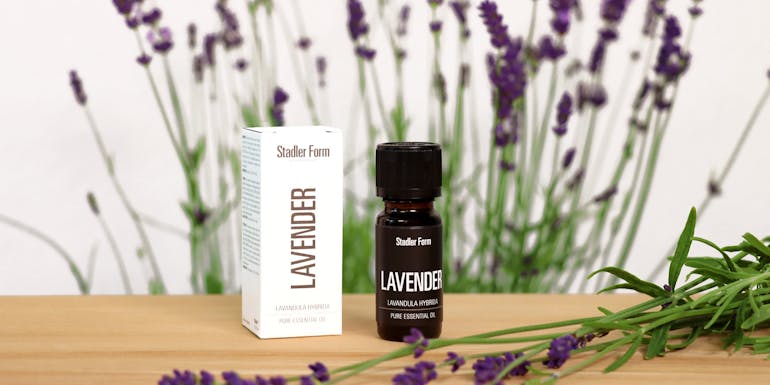
Below are some essential oils that help you fall asleep.
- Lavender: has a calming effect and helps to reduce stress and anxiety.
- Valerian: has a calming effect and helps to reduce stress.
- Cedarwood: relaxes and calms the mind.
- Camomile: helps to relieve tension, anxiety, irritability and the processing of emotions.
- Lemon balm: helps with restlessness, stress and states of tension.
- Bergamot: has a mood-lifting, encouraging, comforting and relaxing effect.
- Sandalwood: has a mood-lifting, regulating and inspiring effect.
- Swiss stone pine: calming effect on the heart and circulation.
- YIang-YIang: has a calming and relaxing effect.
Using essential oils with an aroma diffuser to help you fall asleep
An aroma diffuser is one of the easiest ways to diffuse essential oils in the bedroom. The diffuser releases the essential oil evenly throughout the room and creates a calming atmosphere. Simply add a few drops of your favourite calming oil to the diffuser and let it run for a few minutes before going to bed.
An aroma diffuser with a flame effect also creates a cosy atmosphere in the bedroom. The amber-coloured light creates a calming ambience. This allows you to relax at the end of the day.

How else can essential oils be used?
Essential oils can be used in a variety of ways. Please note that Stadler Form essential oils are only suitable for room fragrancing. Various possible applications of essential oils are presented below. Check first whether your fragrance oil is suitable for the respective application.
A warm bath with essential oils can help to relax the body and prepare it for sleep. To avoid irritating your skin, you should mix the oil with a carrier solution (e.g. a few tablespoons of almond or jojoba oil) and then add it to the bath water. 5 drops of essential oil are usually sufficient for a full bath.
Another option is to apply the oil directly to the skin. Mix your favourite oil with a carrier oil and gently massage the mixture into the skin. This can help to relieve muscle tension and calm the mind. However, this application is not suitable for allergy sufferers, babies and children. To avoid skin irritation, you should always apply the oil to a small area of skin first and observe how your skin reacts to it. This applies to both baths and massages. When using essential oils for sleep problems and disorders, it is also always advisable to consult a healthcare professional first.
Scientific studies on essential oils for better sleep
Some essential oils can promote the production of melatonin, a hormone that regulates the sleep-wake cycle. The natural hormone melatonin promotes sleepiness in the dark. It sends signals to the brain when it is time to rest. In the evening, decreasing light levels ensure that more melatonin is released. Melatonin levels fall continuously from the age of 25. By the age of 70, only around a tenth of the original amount is produced. This can lead to sleep disorders. According to the University Hospital of Zurich, one in four people suffers from sleep disorders.
A study has shown that the use of aromatherapy with lavender oil can significantly improve melatonin levels in older people.
Another study has shown that inhaling essential oils (lavender oil was the most tested) helps very well with sleep disorders.
How do essential oils stimulate our sense of smell?
The sense of smell is also highly effective with essential oils. This means that essential oils can be used to improve both physical and mental well-being by inhaling fragrances. Our oldest sense is the sense of smell. Feelings and experiences that are linked to an odour are strongly imprinted.
The limbic system, which is responsible for controlling emotions and memory, among other things, can therefore be directly influenced. Sensory stimulation through essential oils can evoke pleasant memories or pleasant feelings that contribute to relaxation and make it easier to fall asleep.
Some essential oils have a mood-enhancing property. A good mood can reduce stress and enable deep and restful sleep.
You can also find detailed information on the links between essential oils and emotions in our blog "Essential oils and emotions: how do they work together?"
What factors influence a good night’s sleep?
Other factors are also important for healthy sleep. Here are some examples that influence our sleep
- regular bedtimes
- sufficient exercise during the day
- a light meal in the evening
- little alcohol
- ideally avoid coffee 6–8 hours before going to bed
- relaxing thoughts before going to sleep
- cool bedroom temperature, 16–19 °C is considered ideal
- avoid screen-based activities one hour before going to sleep. The blue light from the screen prevents the release of the sleep hormone melatonin.

The diverse effects of essential oils make them a valuable tool for improving the quality of sleep. Whether through stress reduction, nervous system regulation or sensory stimulation, the calming and relaxing properties of essential oils can help promote better sleep in a variety of ways. Once you have found the right essential oil for you, nothing stands in the way of a restful night’s sleep. We wish you a good and deep sleep.
Would you like to learn more about how aromatherapy works and how it can help you feel better and improve your mood?
If you have questions related to indoor room climate, please get in touch with us. Or subscribe to our newsletter to regularly get informed about current topics regarding indoor climate, experience reports or Stadler Form insights.


